In custom industrial plants, quality is the result of a controlled process at every stage.
For this reason, testing and commissioning activities are not just a final check, but an integral part of the plant development process.

At Inox-Fer, every system undergoes defined and traceable procedures, with the goal of ensuring design compliance, operational reliability, and seamless integration into the customer’s production environment.

FAT and SAT: the testing phases

The testing process is divided into two distinct and complementary stages: FAT and SAT.

FAT (Factory Acceptance Test)

FAT consists of preliminary acceptance testing carried out at the manufacturer’s facility before the plant is shipped.

This phase allows verification of:

  • compliance with technical design specifications
  • proper functioning of mechanical and electrical components
  • automation and control logic
  • interaction between different subsystems

When applicable, operating conditions are simulated to validate plant behavior.

Performing FAT in a controlled environment makes it possible to identify any critical issues in advance, resolving them directly at the production site and reducing time and complexity in later stages.
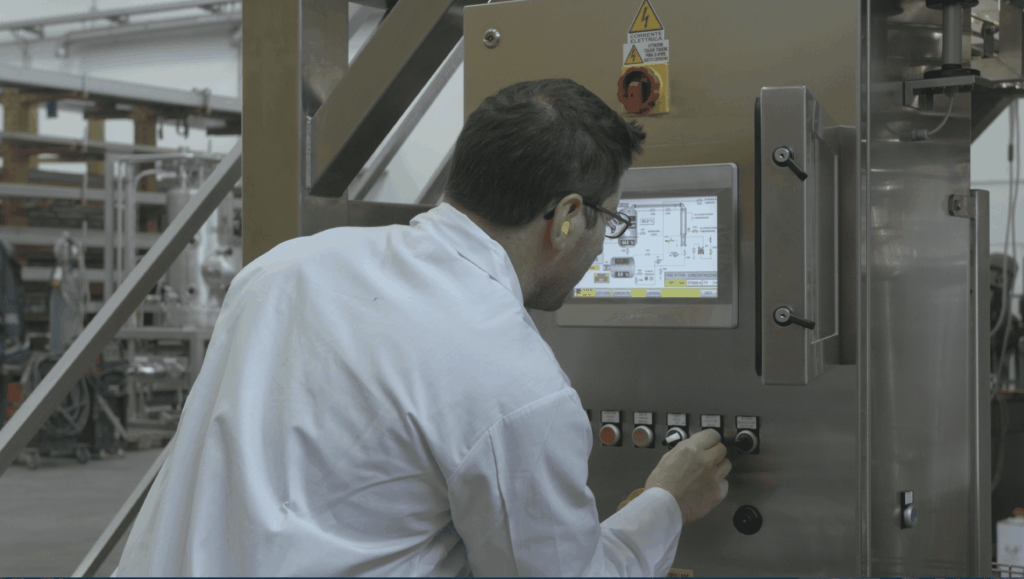
checking electrical components during industrial plant testing

SAT (Site Acceptance Test)

SAT is the testing carried out at the customer’s site after installation, in order to verify the system under real operating conditions.

During this phase, the following are checked:

  • plant operation within the actual production environment using the end customer’s utilities
  • integration with existing production lines
  • compliance with required performance through testing with different products and recipes
  • safety conditions and operational stability

SAT concludes with joint validation with the customer and represents the operational step toward commissioning.

It is often also an opportunity to provide training for operators who will use the plant, enabling them to work independently both in machine operation and routine maintenance.

Validation of custom plants: control and reliability

In custom-built plants, every solution is designed around specific requirements.
This makes validation an essential step.

A structured testing process makes it possible to:

  • verify alignment between design and final result
  • ensure operational continuity
  • reduce the risk of issues during operation
  • guarantee performance in line with production goals

At INOX-FER, validation is based on documented and shared procedures, giving customers full visibility into every stage.

Testing as part of the production process

Industrial plant testing is an integral part of the INOX-FER working method.

The goal is to deliver plants that are:

  • ready for integration
  • reliable over time
  • consistent with defined specifications
  • fully tested before start-up

A structured testing approach helps reduce variables during the start-up phase and ensures faster and more effective commissioning.

🚀Take your industrial production to the next level

Request a free consultation and receive a customized proposal for your industrial plant.

FAQ – About industrial plant testing

FAT (Factory Acceptance Test) is the testing carried out at the manufacturer’s facility before the plant is delivered. It is used to verify that all components function correctly and that the system complies with design specifications.

SAT (Site Acceptance Test) is the testing performed at the customer’s site after installation. It allows verification of the plant’s operation under real working conditions and represents the final validation before start-up.

In custom-built plants, testing and commissioning are essential to ensure that the implemented solution fully meets production requirements, reducing risks, inefficiencies, and downtime.

The main difference lies in where they are performed:

  • FAT takes place at the manufacturer’s facility
  • SAT takes place at the customer’s site, under real operating conditions

Both are complementary and necessary for complete validation.

Testing activities involve the INOX-FER technical team and, in the most critical phases, the customer as well. This ensures transparency, shared results, and joint validation.