

Sommario
- 1. Two Technologies, Two Design Philosophies
- 2. Plate Heat Exchanger: Compact Design and High Efficiency
- 3. Shell-and-Tube Heat Exchanger: Flexibility and Robust Performancei
- 4. There Is No Absolute “Best” Choice
- 5. Key Factors That Really Matter
- 6. The Value of Custom Engineering
- 7. Summary
- 8. 🚀Need to identify the best solution for your plant?
- 9. FAQ – About Heat Exchangers
- 9.1. 1. What is the difference between plate and shell-and-tube heat exchangers?
- 9.2. 2. When should you choose a plate heat exchanger?
- 9.3. 3. When is a shell-and-tube heat exchanger preferable?
- 9.4. 4. How does fouling affect heat exchanger selection?
- 9.5. 5. Which heat exchanger is more efficient?
- 9.6. 6. Can plate heat exchangers operate at high pressure?
- 9.7. 7. How is a heat exchanger sized?
- 9.8. 8. Is a standard or custom heat exchanger better?
When designing or optimizing an industrial plant, selecting the right heat exchanger is never a secondary detail. It has a direct impact on energy efficiency, operational continuity, and long-term operating costs.
Among the most widely used solutions, plate and shell-and-tube heat exchangers represent two different engineering approaches to the same goal: efficient and controlled heat transfer. Understanding when to choose one over the other helps avoid oversizing, inefficiencies, and operational issues.
Two Technologies, Two Design Philosophies
The underlying principle is always the same—heat transfer between two fluids—but the way it is achieved, and more importantly the operating context in which each solution performs best, is very different.
A plate heat exchanger uses thin, corrugated plates to maximize heat transfer efficiency. A shell-and-tube exchanger, on the other hand, is designed for more complex conditions: higher loads, variable operating parameters, and stricter mechanical constraints.
Plate Heat Exchanger: Compact Design and High Efficiency
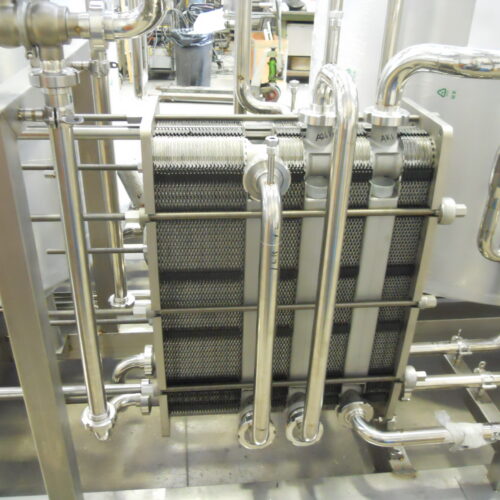
A plate heat exchanger is often the ideal choice when high thermal performance is required in a compact footprint.
Thanks to its corrugated plate geometry, it achieves very high heat transfer coefficients while minimizing required surface area. It is particularly effective in continuous, well-controlled industrial processes.
When It Makes Sense to Choose It
- Medium to high flow rates
- Clean or moderately contaminated fluids with low to medium viscosity
- Small to moderate temperature differences
- Systems where efficiency and compactness are key priorities
In these cases, plate heat exchangers deliver excellent performance, reduced space requirements, and relatively simple maintenance (especially in gasketed designs).
Plate Heat Exchangers for Pasteurization: Energy Recovery and Cost Savings
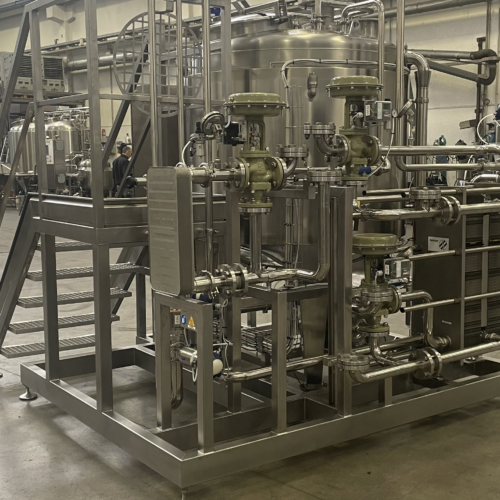
Plate heat exchangers for pasteurization are widely used in the food industry to reduce energy consumption and optimize thermal processes.
A key feature is the heat recovery section, which allows the energy from the outgoing hot product to preheat the incoming cold product.
Main benefits
- Lower energy consumption
- Reduced operating costs
- Higher process efficiency
- Improved environmental sustainability
They are widely used for milk, juices, and beverages, making them a key technology for improving efficiency and competitiveness in pasteurization plants.
Shell-and-Tube Heat Exchanger: Flexibility and Robust Performancei
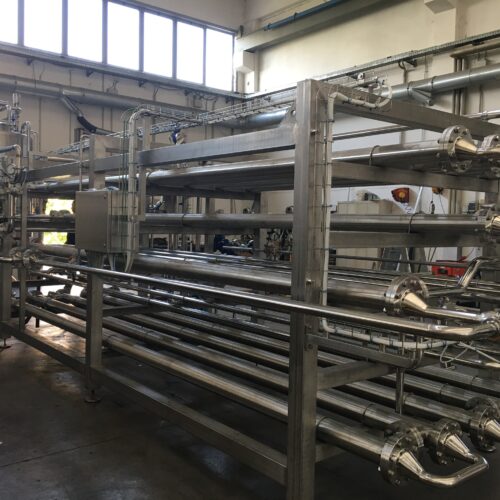
When operating conditions become more demanding—higher thermal loads, critical fluids, or stricter design constraints—the shell-and-tube heat exchanger becomes the preferred solution.
Its configuration, consisting of a bundle of tubes inside a shell, significantly increases heat transfer surface and enables more complex thermal designs. This results in high mechanical robustness and excellent adaptability to harsh industrial environments.
Where It Excels
- Large flow rates and high thermal duties
- Dirty fluids or those prone to fouling, with high viscosity and high pressure
- High temperature and pressure conditions
- Systems requiring frequent inspection and maintenance
It is widely used in chemical, energy, and oil & gas industries, where reliability and maintainability are essential for continuous operation.
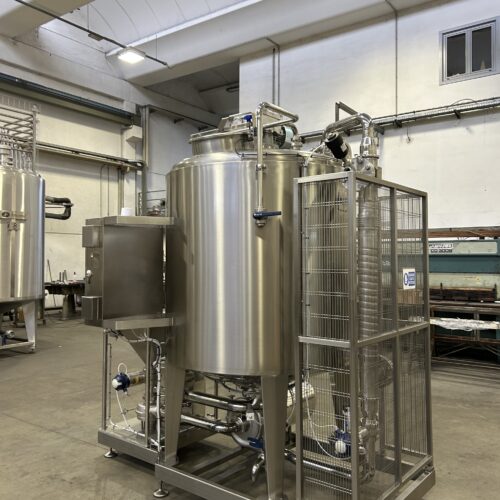
There Is No Absolute “Best” Choice
Una domanda che riceviamo spesso è: qual è la soluzione migliore?
The reality is that there is no universal answer—only the most suitable solution for a specific process.
For example, systems with clean fluids and stable conditions often benefit from the high efficiency of plate heat exchangers. In contrast, in the presence of fouling or harsh operating conditions, shell-and-tube exchangers are typically more robust and easier to manage.
👉 Further reading on fouling:
https://en.wikipedia.org/wiki/Fouling
Key Factors That Really Matter
Rather than the technology itself, several parameters drive the selection process:
Thermal Load
As required capacity increases, the need for heat transfer surface grows. Plate exchangers offer high efficiency, while shell-and-tube units provide scalability and robustness.
Fluid Characteristics
Dirty, viscous fluids or those containing solids require designs that minimize clogging and simplify cleaning operations.
Pressure Drop
Plate heat exchangers are highly efficient but may result in higher pressure drops, making correct sizing essential.Gli scambiatori a piastre offrono elevata efficienza ma possono comportare perdite di carico più elevate; è quindi fondamentale un corretto dimensionamento.
Maintenance
No system is static over time. Plate heat exchangers allow fast inspection and servicing, while shell-and-tube designs are preferred when mechanical cleaning is required.
The Value of Custom Engineering
Beyond standard categories, engineering design is what truly makes the difference.
Proper heat exchanger sizing involves:
Heat transfer coefficients
Log mean temperature difference (LMTD)
Material selection
Real operating conditions
👉 Technical reference:
https://it.wikipedia.org/wiki/Differenza_di_temperatura_logaritmica_media
Standard solutions are often insufficient in demanding industrial applications. That is why more companies are adopting custom-designed heat exchangers tailored to their specific processes.
Summary
Choosing between a plate and a shell-and-tube heat exchanger means finding the right balance between efficiency, robustness, and long-term operability.
- Plate heat exchangers are ideal for efficiency, compactness, and fast heat transfer
Shell-and-tube exchangers are the best choice for harsh conditions, high loads, and critical fluids
Ultimately, performance depends not only on the technology, but also on how it is engineered,.
🚀Need to identify the best solution for your plant?
The INOX-FER engineering team is available to analyze your requirements and design the most efficient heat exchanger for your process.
FAQ – About Heat Exchangers
1. What is the difference between plate and shell-and-tube heat exchangers?
The main difference lies in geometry and thermal performance.
Plate heat exchangers use corrugated plates to maximize heat transfer efficiency in a compact design. Shell-and-tube exchangers use a tube bundle inside a shell, offering greater robustness and suitability for demanding conditions.
2. When should you choose a plate heat exchanger?
It is recommended when:
Fluids are clean or lightly fouling
High thermal efficiency is required
Space is limited
Easy maintenance is desired
3. When is a shell-and-tube heat exchanger preferable?
It is the better choice when:
Thermal loads are high
Fluids are fouling-prone
High pressure or temperature is involved
Mechanical cleaning is required
4. How does fouling affect heat exchanger selection?
Fouling reduces thermal efficiency over time.
Plate heat exchangers are more sensitive to fouling, while shell-and-tube designs handle dirty fluids better due to easier cleaning access.
5. Which heat exchanger is more efficient?
Plate heat exchangers are generally more efficient due to higher heat transfer coefficients.
However, in harsh operating conditions, shell-and-tube exchangers often provide better long-term reliability.
6. Can plate heat exchangers operate at high pressure?
It depends on the design.
Brazed or welded plate heat exchangers can handle high pressures, but shell-and-tube designs are generally preferred for extreme conditions.
7. How is a heat exchanger sized?
Sizing depends on several parameters, including:
Required thermal duty
Temperature difference between fluids
Overall heat transfer coefficient
Fluid properties
The calculation is typically based on the log mean temperature difference (LMTD) method and requires detailed engineering analysis.
8. Is a standard or custom heat exchanger better?
It depends on the application.
Standard units may be sufficient for simple systems, while custom-engineered solutions are essential for optimizing performance, durability, and lifecycle cost in complex industrial processes.