
Venturi Effect: principle, operation and industrial applications

The Venturi effect is a fundamental principle of fluid mechanics, widely used in industrial processes for the handling, suction and mixing of fluids and powders.

First described by Giovanni Battista Venturi, this phenomenon establishes a relationship between the velocity and pressure of a fluid within a duct, forming the technological basis for many modern industrial systems.

What is the Venturi effect

The Venturi effect occurs when a fluid flows through a constricted section of a pipe:

  • the fluid velocity increases
  • the static pressure decreases

This variation creates a localized vacuum, which can be exploited to draw in other fluids or materials.

The phenomenon is directly related to the Bernoulli’s principle and represents an effective solution for generating suction without the need for complex mechanical components.

How the Venturi effect works in industrial systems

From an engineering perspective, a Venturi system consists of:

  • a converging section (reduced cross-section
  • a throat (area of maximum velocity and minimum pressure)
  • a diverging section (pressure recovery)

As the fluid passes through the throat, a low-pressure zone is created, enabling

  • incorporation of powders or additives
  • dosing of secondary fluids
  • removal of air or gases from pipelines

In industrial applications, this principle is implemented using calibrated nozzles and centrifugal pumps, ensuring continuous flow and operational stability.
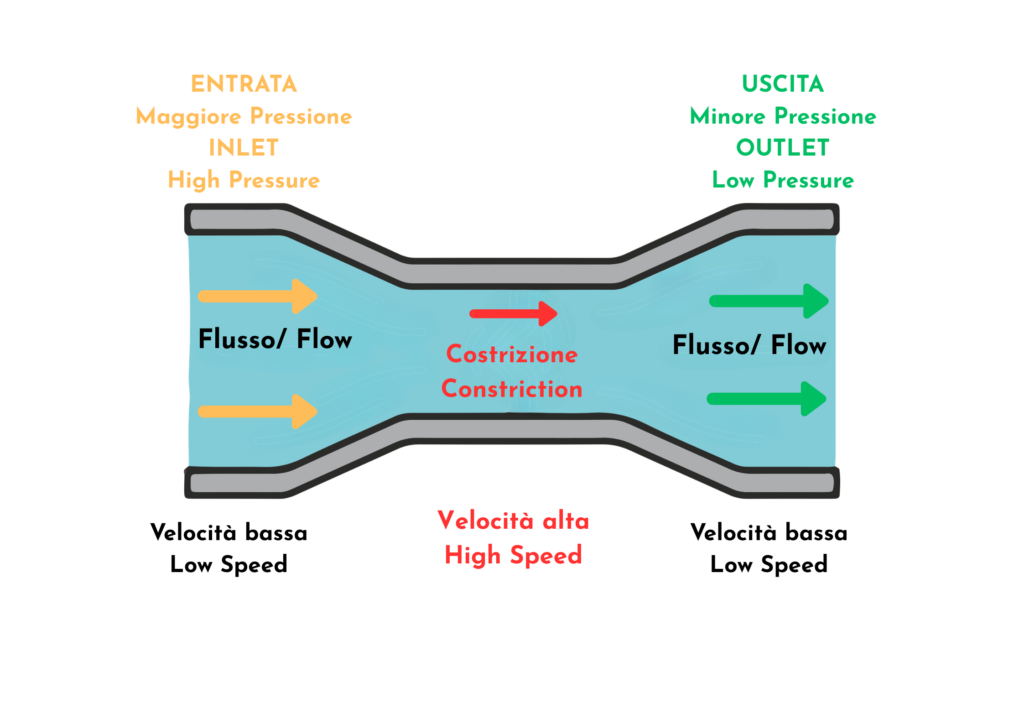
effetto venturi

Application of the Venturi effect in INOX-FER systems

In INOX-FER mixing systems, the Venturi effect is the core principle behind powder dissolution and liquid homogenization processes.

The process follows a precise sequence:

  • a centrifugal pump draws liquid from the tank
  • a vacuum is generated below the hopper
  • powders are sucked in and incorporated into the fluid
  • the mixture is recirculated until complete homogenization

This ensures fast and uniform dissolution, reducing clumping and improving final product quality
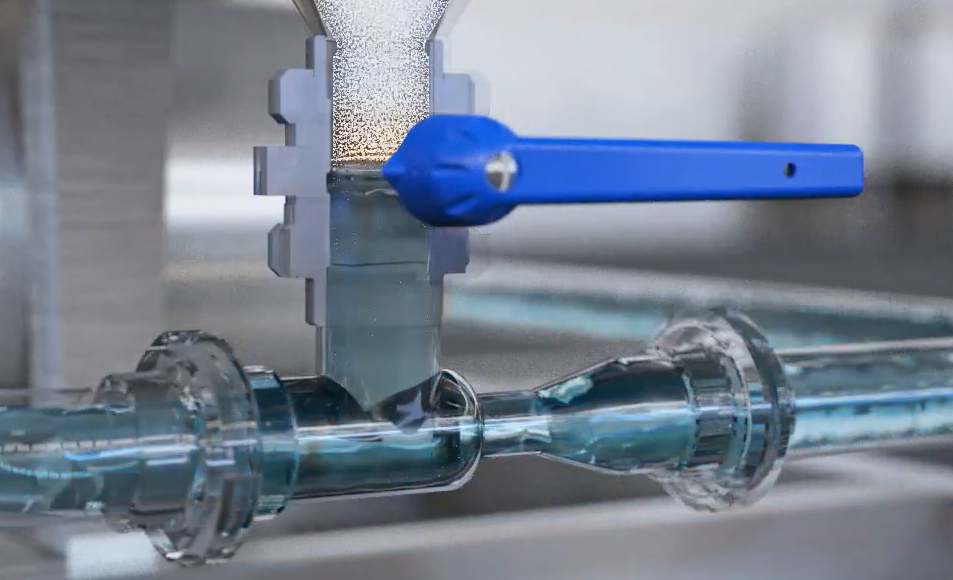
effetto venturi applicato inox fer

Technical advantages of the Venturi effect

The use of the Venturi effect in industrial processes offers several advantages:

fast and controlled mixing

improved homogeneity

no mechanical suction components

higher reliability and lower maintenance

reduced processing times

increased productivity

high energy efficiency

direct use of fluid dynamics

high versatility

suitable for liquids, powders and gases

These features make it ideal for continuous and automated industrial processes.

Industrial applications

The Venturi effect is used across various industries:

  • food industry: dissolution of sugars, salts and thickeners
  • chemical and pharmaceutical industries: controlled dosing and mixing
  • washing systems: detergent suction
  • aeration and degassing systems
  • spraying and atomization technologies

In INOX-FER applications, it is particularly effective in liquid–powder mixing systems, ensuring speed and process uniformity.

Why choose INOX-FER Venturi solutions

INOX-FER technologies apply the Venturi principle in systems designed to ensure:

  • maximum suction and dissolution efficiency
  • uniform final product quality
  • integration with automated systems
  • customization based on production requirements

Through a tailored engineering approach, INOX-FER transforms a physical principle into a concrete competitive advantage.
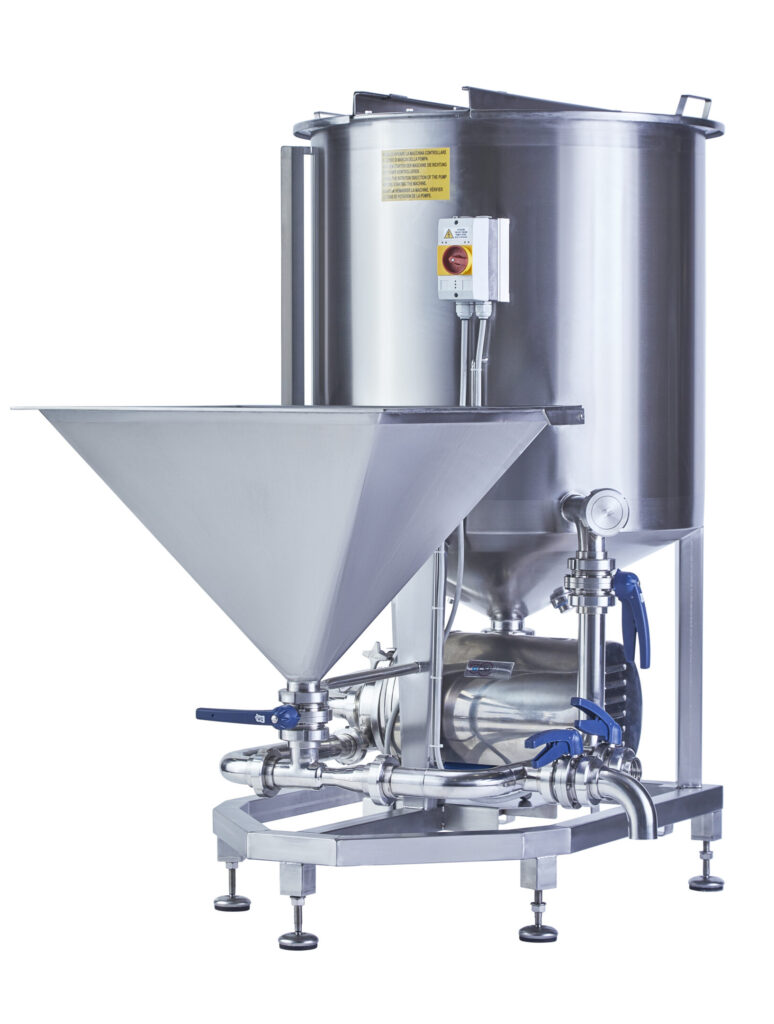
DR mixing system with venturi effect

🚀Contact Inox-Fer for Venturi effect-based solutions

Request a personalized technical consultation today and discover how to take your production to the next level in terms of quality and competitiveness.

FAQ – On Venturi Effect

It is a fluid dynamics principle that generates a vacuum by increasing fluid velocity in a constricted section, used for suction and mixing.

The moving fluid creates a low-pressure zone that draws powders into the line, ensuring fast and uniform dispersion.

Lower maintenance, higher reliability, no wear-prone mechanical parts, and better energy efficiency.

Fluid velocity, duct geometry, operating pressure and fluid viscosity.

Food, chemical, pharmaceutical, cosmetic and industrial processing sectors.

Yes, it is ideal for automated and continuous operations due to its stability.