

Sommario
- 1. What Is a CIP System and Why Is It Important in Food Processing?
- 2. How CIP Cleaning Works
- 3. Main Stages of a CIP Cycle
- 4. What Benefits Can an Automated CIP System Offer?
- 5. What Determines the Effectiveness of a CIP System?
- 6. Automatic or Semi-Automatic CIP: Which Should You Choose?
- 7. How INOX-FER Integrates CIP into Food Processing Plants
- 8. Designing CIP Around the Product and Process
- 9. FAQ - Frequently Asked Questions About CIP Cleaning Systems
A CIP cleaning system (Clean-in-Place) cleans and rinses the internal surfaces of processing equipment, vessels and pipework without dismantling the main process sections. In the food industry, this technology makes cleaning more controllable and repeatable, can reduce downtime and helps protect product quality from one production cycle to the next.
In brief: CIP is more than a sequence of washing steps. It is a process that must be engineered around the product, plant geometry, the residues to be removed and the cleaning parameters to be monitored.
What Is a CIP System and Why Is It Important in Food Processing?
CIP stands for Clean-in-Place. A cleaning solution is circulated through a closed circuit covering the relevant parts of the plant: pipework, pumps, valves, vessels and other product-contact surfaces designed for in-place cleaning.
The purpose is to remove organic and inorganic residues effectively while limiting manual work and dismantling. For a food manufacturer, a repeatable cycle helps maintain consistent hygienic conditions, prevent cross-contamination and protect the sensory and quality characteristics of each recipe.
The Regulation (EC) No 852/2004 852/2004 lays down general rules on the hygiene of foodstuffs. Within this framework, a well-designed cleaning process supports the operator’s hygiene procedures and food-safety controls, but it must be defined and validated for the specific application.
How CIP Cleaning Works
Cleaning effectiveness depends on the balance between four factors: the mechanical action of the fluid, the chemical action of the detergent, temperature and contact time. The correct combination varies according to the product, the deposits to be removed, construction materials and line configuration.
Parameters to Control
- Flow rate and circulation velocity, to provide suitable mechanical action in pipework and components
- Solution temperature, compatible with the detergent, residue and plant materials.
- Chemical concentration, maintained within the range defined for the cycle.
- Contact time, sufficient for each stage to perform as intended.
- Return conditions, which may be monitored through parameters such as temperature and conductivity, depending on system configuration.
Main Stages of a CIP Cycle
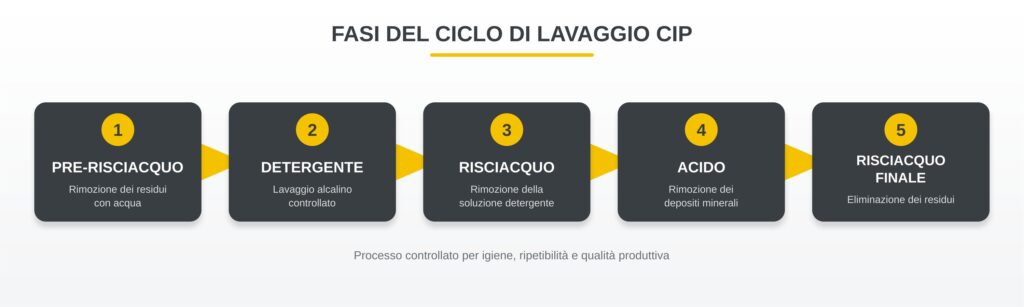
The sequence must be adapted to the production process. A typical configuration may include:
- Water pre-rinse to remove most product residues.
- Alkaline wash using a solution prepared at the specified concentration and temperature, particularly useful for many organic residues.
- Intermediate rinse to remove the detergent solution and dissolved material.
- Acid wash, where required, to treat mineral deposits and scale.
- Final water rinse until the specified parameters are reached.
- Disinfection or sanitisation, where required by the protocol, followed by the necessary steps before production restarts.
Technical note: not every cycle necessarily includes every stage. Detergents, temperatures, concentrations and times must be established with the competent specialists and validated on the actual process.
What Benefits Can an Automated CIP System Offer?
Repeatable Cleaning and More Consistent Quality
Stored cleaning recipes and controlled parameters reduce variability between cycles. Repeatable cleaning helps limit the risk of residues, contamination and unwanted changes to the finished product.
Reduced Downtime
Closed-circuit cleaning limits many opening and dismantling operations. When correctly sized and integrated, the transition between production and cleaning can become faster and easier to schedule.
More Controlled Use of Water, Energy and Detergents
Automation manages times, temperatures and dosing according to defined recipes. Sensors and recovery strategies can help prevent over-cleaning and unnecessary consumption, although results depend on plant design and the product being processed.
Improved Operational Safety and Traceability
By reducing manual handling of components and cleaning solutions, CIP can improve the organisation of cleaning work. Automatic control can also record stages, times, temperatures and other values used to verify the cycle.
What Determines the Effectiveness of a CIP System?
A CIP unit alone does not guarantee the required result. Cleanability comes from the overall plant design and the correct interaction between components, recipes and procedures.
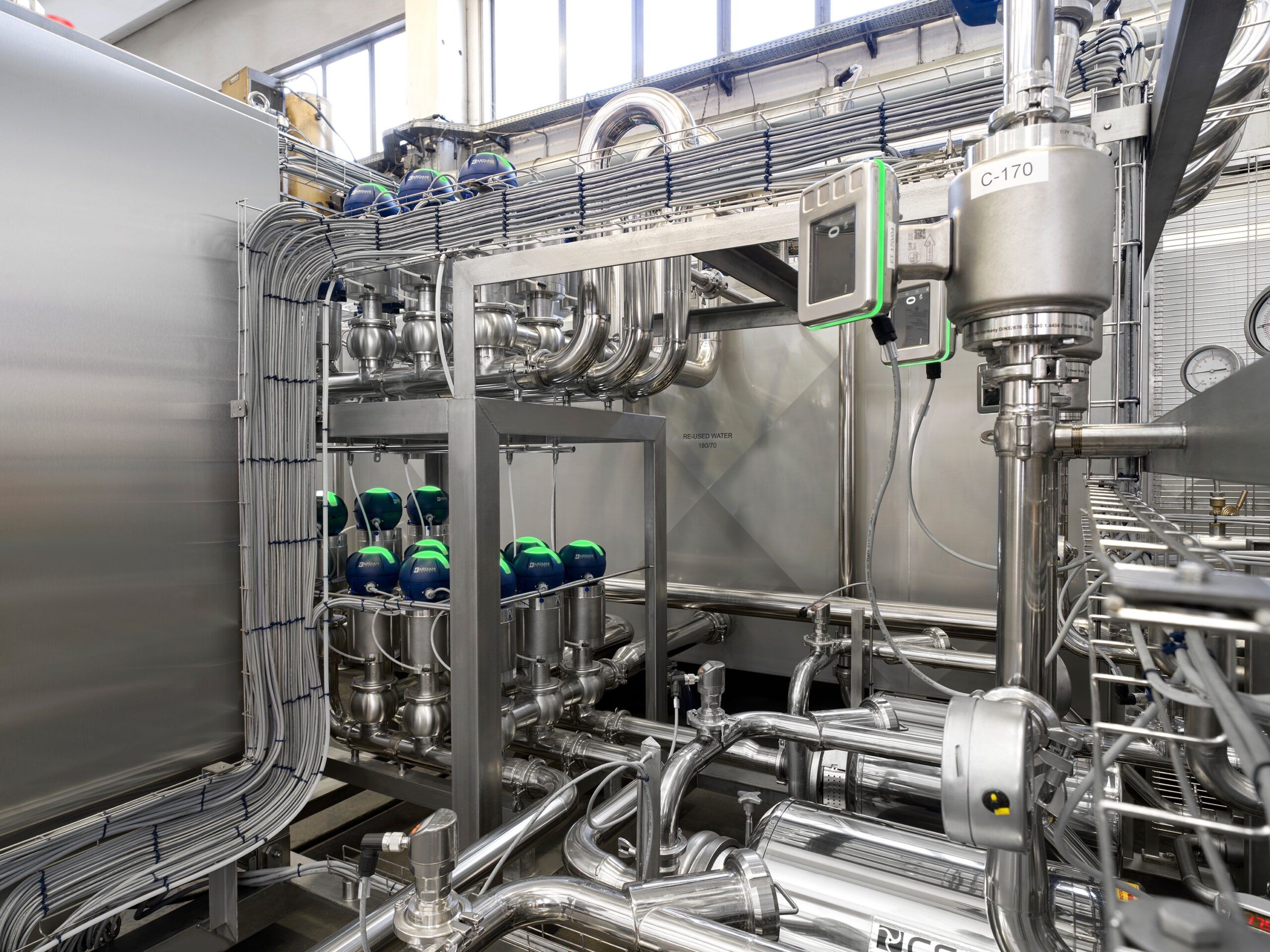
- Hygienic design of vessels, pipework, fittings, valves and drain points.
- Elimination, wherever technically possible, of dead legs and hard-to-reach areas.
- Correct selection and positioning of spray balls or cleaning heads in vessels.
- Adequate flow, pressure and temperature throughout every stage.
- Chemical compatibility of materials and seals.
- Cleaning recipes defined for each product family and validation of the result.
- Suitable instrumentation for monitoring, alarms, recording and maintenance.
Automatic or Semi-Automatic CIP: Which Should You Choose?
The appropriate level of automation depends on product-change frequency, the number of circuits, production volumes, traceability requirements and available resources. A semi-automatic system may suit simple lines or less frequent production, while an automatic system offers greater repeatability, recipe management and parameter recording for complex plants or numerous daily cycles.
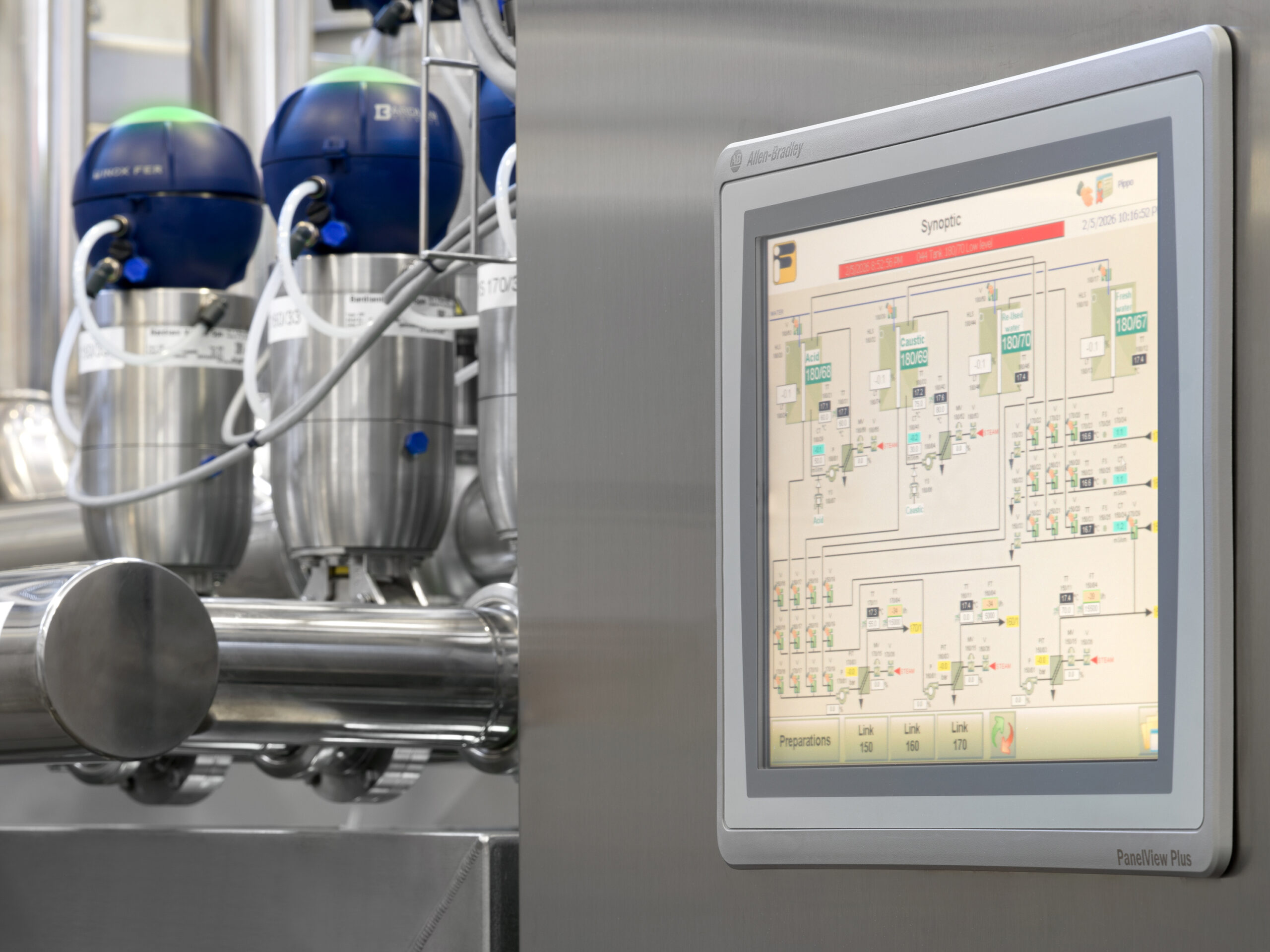
The assessment should also consider integration with the PLC and operator panel, solution recovery, circuit separation and the possibility of cleaning several users sequentially or, where provided by the design, in parallel.
How INOX-FER Integrates CIP into Food Processing Plants
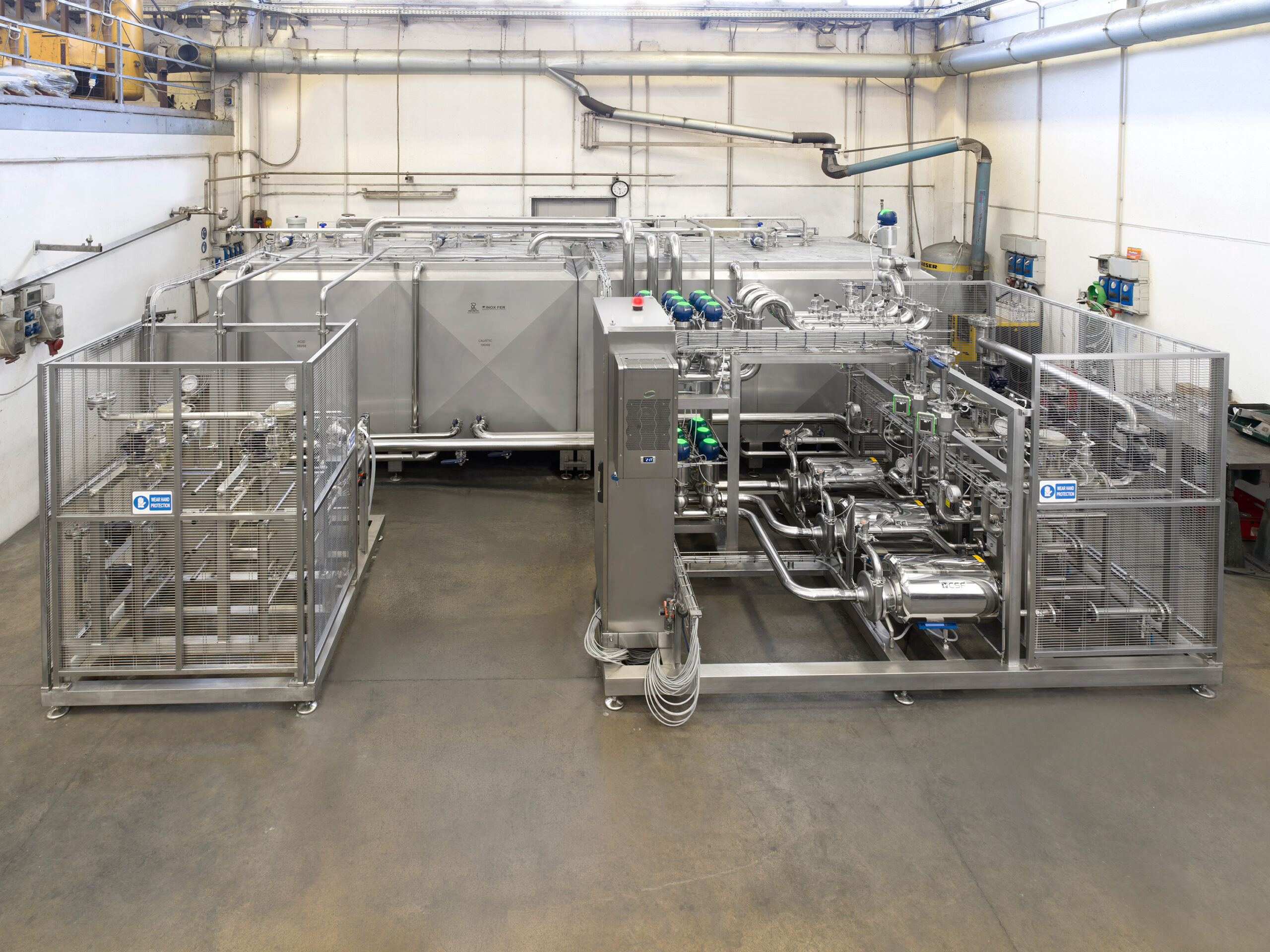
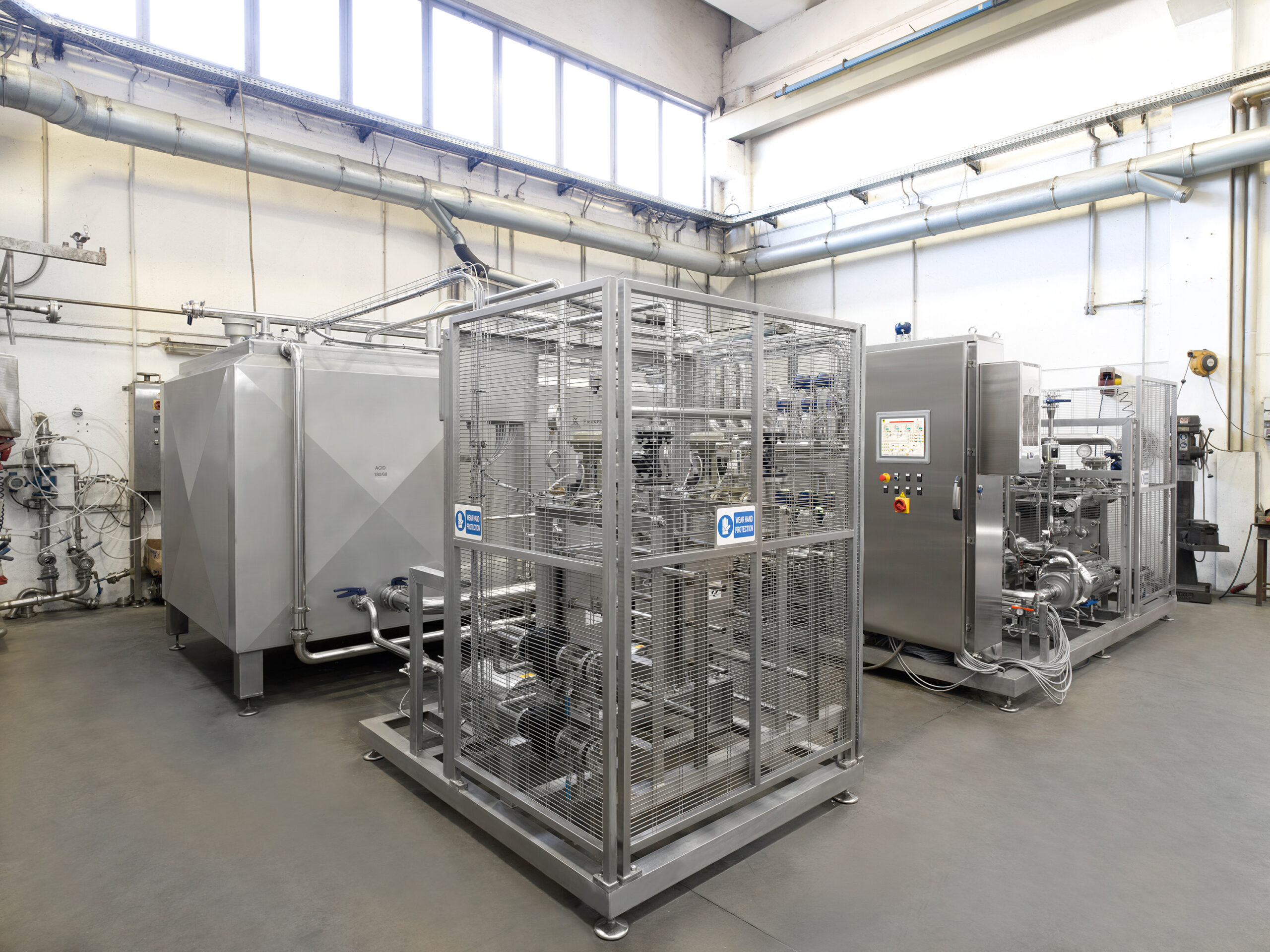
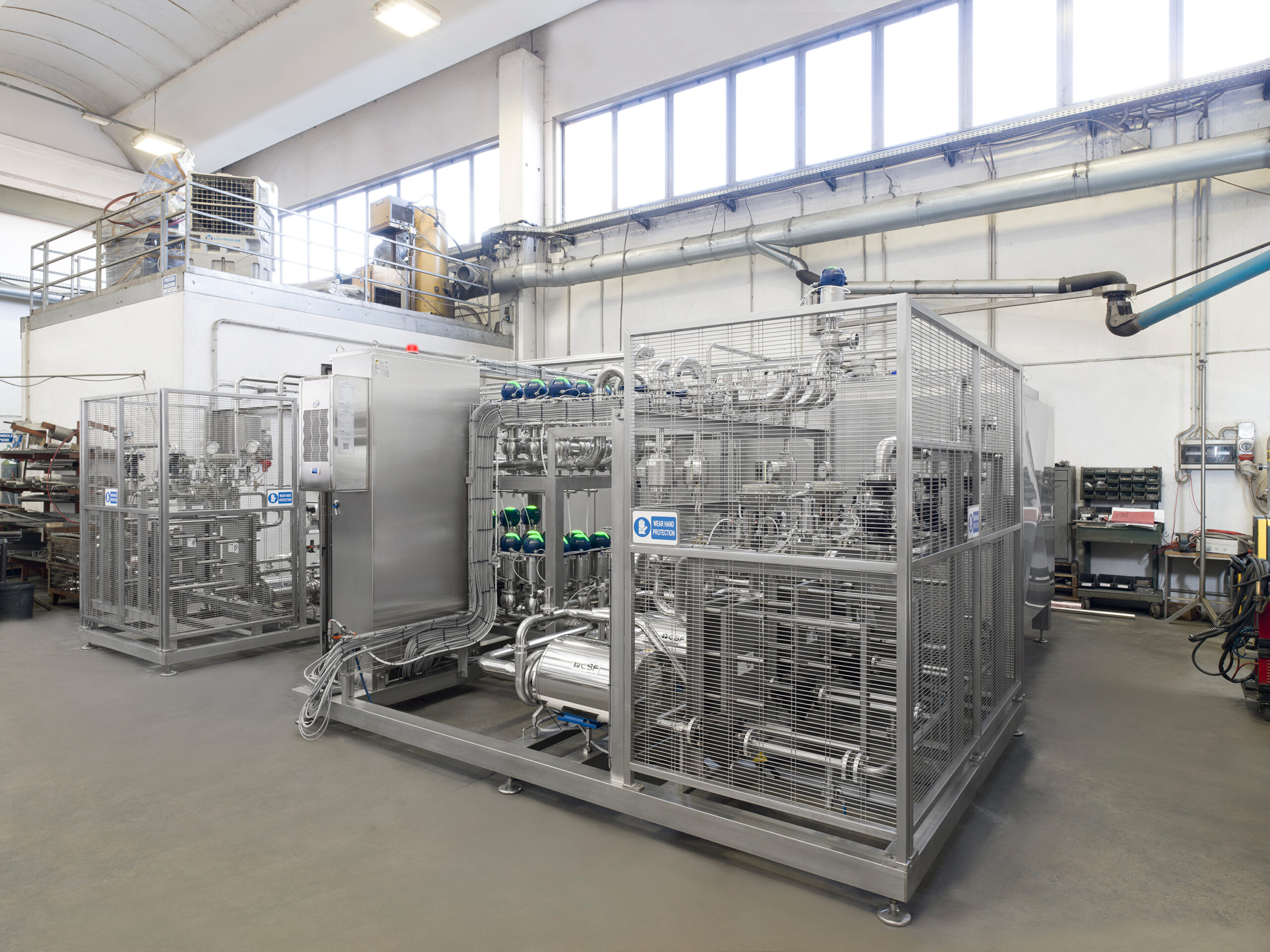
INOX-FER designs and manufactures customised plants for the food industry, integrating CIP according to the product and process. The analysis begins with recipe characteristics, viscosity, expected residues, layout and the customer’s production requirements.
The system can be configured to clean vessels, pipework, pumps, valves and process equipment, with the level of automation defined for the project. In complete processing systems, CIP can communicate with the line controls to coordinate production, emptying, rinsing and cleaning.
This approach allows hygiene to be considered from the earliest design stages alongside accessibility, drainability, maintenance, consumption and production continuity
Designing CIP Around the Product and Process
An effective cleaning system cannot simply be added at the end of a project: it must be designed together with the production line. Product, recipes, changeover frequency, geometry, automation and utilities determine the most suitable configuration.
FAQ - Frequently Asked Questions About CIP Cleaning Systems
CIP means Clean-in-Place: internal plant surfaces are cleaned through the controlled circulation of water and cleaning solutions without dismantling the main sections involved.
Not always. Some components or external areas may still require manual intervention. Actual coverage depends on plant design and the defined protocol.
Typically: pre-rinse, alkaline wash, intermediate rinse, optional acid wash, final rinse and optional disinfection or sanitisation. The sequence must be adapted to the product and validated.
There is no universal duration. It depends on residues, circuit size and geometry, temperature, chemical concentration, flow rate and the hygienic objective.
Process parameters and acceptance criteria are defined, followed by validation, monitoring and verification activities suited to the risk and production line.
Often yes, but cleanability, drainability, components, flow rates, utilities and available automation must be assessed. A site survey or engineering study can identify the required modifications.